Mary Countess Cowper (1685–1724)
Pat Rogers, University of South Florida
June 2026
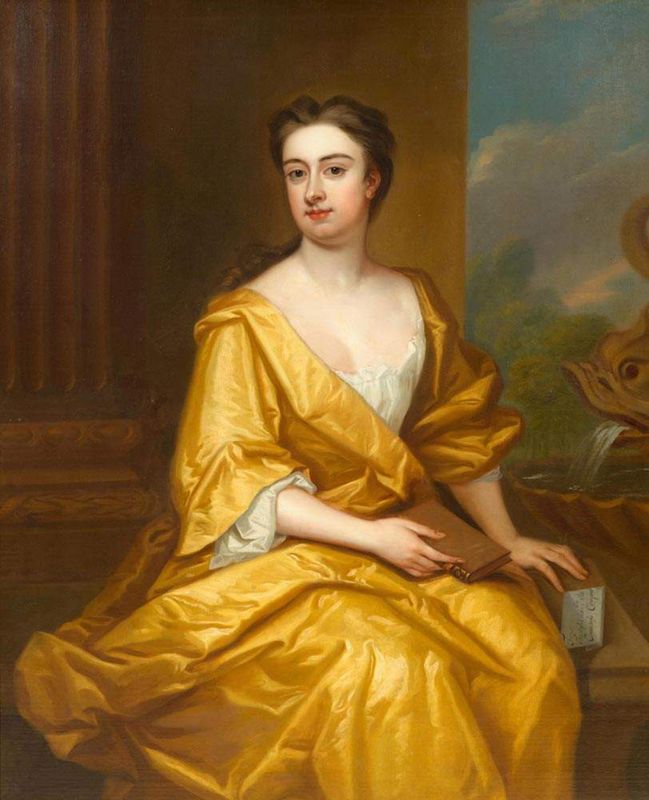
In her short life, Mary Cowper was a lady of the bedchamber to the Princes of Wales, and also the second wife of William Cowper (1665–1723). It was in this second role that she was best known to the contemporary public. She had been born Mary Clavering, to a relatively obscure family in the gentry of County Durham, but had moved to London when young and attracted notice for her skill on the harpsichord as well as her beauty. She is supposed to have been a Kit Cat Club toast, suggesting early links with the Whig establishment. After the couple’s secret wedding in 1705 (her niece by this marriage was the poet Judith Cowper Madan (1702–1781)), her husband was made a baron as a result of his appointment as Lord Keeper of the Great Seal, and in 1707 was appointed Lord Chancellor. Already prominent as a jurist and a leader of the Whig party in the House of Lords, he served until the change of ministry in 1710 when the Tories swept into power. Pending the arrival of George I in 1714 William was made one of the Lord Justices, and soon afterwards reappointed Lord Chancellor. Both he and Mary had already made contacts with Princess Caroline in Hanover, and over the next few years they would provide an important link between English politicians and the German bloc at court. Mary was especially close to Baron Andreas Gottlieb von Bernstorff (1649–1726), one of the key figures in Geoge I’s retinue, who was crucial in the disposition of places in the royal household. She also developed an intimate friendship with the Princess.
It is the diary she kept during her tenure that has kept her memory alive. It has been used by all major historians of the first Hanoverian reign since it was published in 1864. Some passages were excluded by the editor, but the full manuscript survives among the Panshanger papers, along with several letters by Mary, her husband and her daughter Sarah (who destroyed some other documents). The couple had one other daughter and two sons, most notably Spencer Cowper (1713–1774), Dean of Durham.
The diary is written in a plain conversational style. It records daily life at court, with some humdrum routine, but also gives detailed accounts of the many personal exchanges between friends and enemies. There are intimate conversations with the Princess, and a description of her time in labour. Among events covered is the Jacobite rising of 1715–1716 (embarrassing for Mary, because a leader of the rebellion in the North was her cousin Thomas Forster, who escaped from Newgate gaol and fled to France), while her husband presided at the trial of the captured Scottish lords. The diary also reveals many of the interactions of politicians such as Robert Walpole, Lord Townshend, and Lord Stanhope with the royal family. Among the ladies with whom Mary spent her days at court were the Duchess of Marlborough, the Duchess of St. Albans, the Duchess of Roxburgh, Henrietta Howard (later Countess of Suffolk), and Lady Mohun. However, the story of the most important sequence of events for Mary has not been fully preserved, since they were eliminated from the diary because of their concern with the hot subject of the quarrel of the King and the Prince of Wales, which led to the expulsion of Caroline and her husband from St. James’s Palace. Mary and her colleague Lady Hinchingbrooke followed their mistress and were required to resign their posts in 1717. The year after this, Lord Cowper also left office, perhaps because he objected to the royal grandchildren being left in the King’s care.
William did not abandon politics, and some of his activities in opposition to Walpole led to his being wrongly accused of complicity in the Jacobite plot led by Bishop Francis Atterbury in 1722. As for Mary, she “soon found herself in a fix when, despite William's public opposition to the South Sea Company, she secretly borrowed money to invest in the stock and lost several hundred pounds when the Bubble finally deflated. At the end of 1720 Mary was still trying to repay creditors while keeping the whole affair secret from her husband” (entry by Anne Kugler in the Oxford Dictionary of National Biography). Lord Cowper died in October 1723, and Mary survived him by only a few months, passing away on 5 February 1724 at the family home of Panshanger in Hertfordshire (recently bult by the Earl, subsequently demolished in 1954). According to her daughter Sarah, she never recovered from the loss of Willam, and “In short, she really had what is often talked of, but seen in very few instances, a broken heart.” She was only thirty-nine, but may have suffered from early onset dementia. Nevertheless, in that short span she left one legacy of permanent value in our understanding of the reign of the Hanoverians.
See Diary of Mary Cowper, Lady of the Bedchamber to the Princess of Wales, 1714 –1720, edited by Charles Spencer Cowper, son of the 5th Lord Cowper (London, 1864). Valuable background to the diary is provided by John M. Beattie, The English Court in the Reign of George I (Cambridge, 1967); and Ragnild Hatton, George I: Elector and King (Cambridge, MA, 1978).